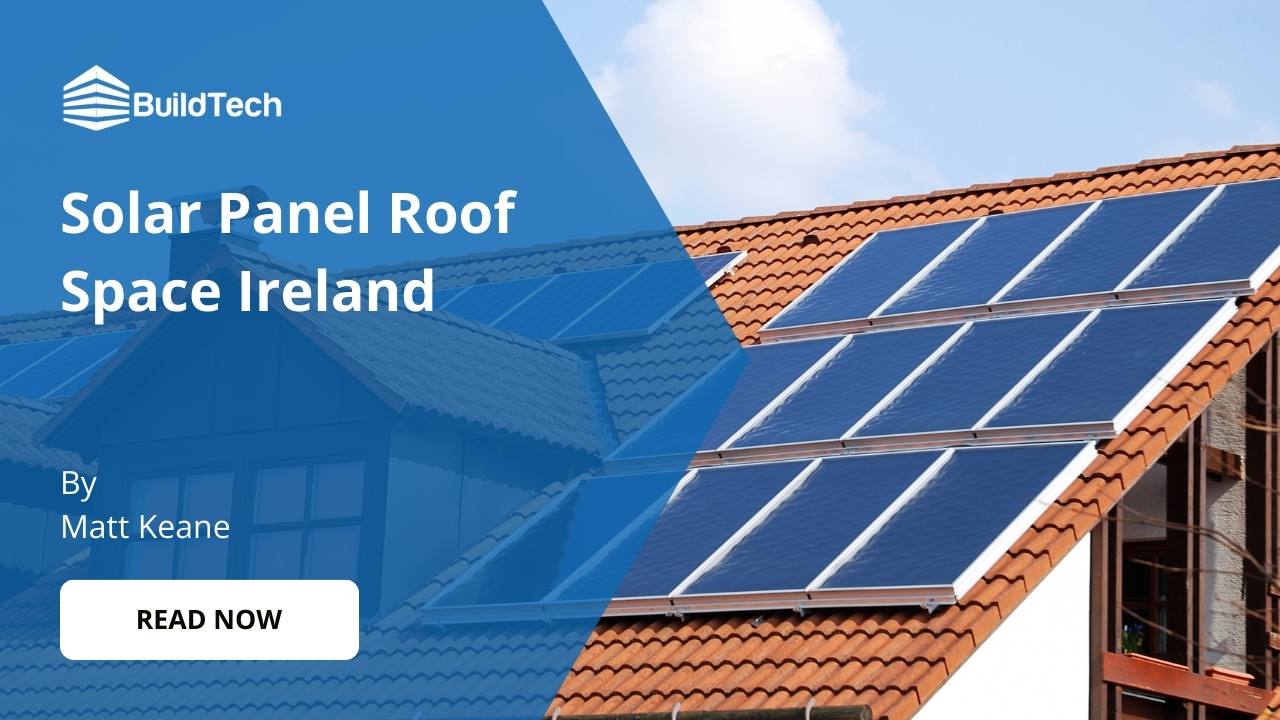
Understanding how much roof space for solar panels is required in Ireland is crucial for homeowners looking to invest in sustainable energy solutions. This comprehensive blog will cover key aspects of solar panel installation, from determining how many panels you need to optimise their energy output. BuildTech is here to guide you on your journey towards a greener future.
How Many Solar Panels Do I Need for My Home?
Evaluating Your Energy Needs
Before determining how much roof space for solar panels is needed, it's crucial to identify how many panels your home requires. Start by evaluating your household's energy consumption. Your energy bill typically provides this information in kilowatt-hours (kWh). The average Irish household consumes approximately 4,200 kWh per year.
Solar Panel Efficiency and Sizing
Solar panel efficiency is another crucial factor when determining the number of panels you need. Most residential solar panels have an efficiency of around 15-20%. To calculate the number of panels needed, divide your annual energy consumption by the efficiency and the average number of sun hours per day (Ireland has about 3.6 sun hours per day).
How Much Roof Space Do I Need for Solar Panels?
Space Requirements
When calculating how much roof space for solar panels is needed, consider the size of each panel. A standard solar panel measures around 1.7m x 1m, with an output of about 300-350W. To determine the space required, multiply the number of panels needed by the size of each panel. Remember that sufficient room for installation, maintenance, and expansion should exist.
Roof Pitch and Orientation
Roof pitch and orientation play a significant role in solar panel efficiency. The ideal roof pitch for solar panels in Ireland is between 30 and 45 degrees, while the optimal orientation is south-facing. East or west-facing roofs can still be effective, but energy output may be slightly reduced. To maximise efficiency, ensure panels are free from the shade and positioned for optimal sun exposure.
What Are the Best Roof Types and Orientations for Solar Panels?
Suitable Roof Types
While most roof types can accommodate solar panels, some are better suited. Flat roofs, for example, require additional racking systems to achieve the desired tilt angle. Tiles, slates, and metal roofs can support solar panels easily, although specialised mounting hardware may be needed for certain materials.
Assessing Roof Conditions
A structurally sound, well-maintained roof is essential for solar panel installation. Consult a professional to assess your roof's suitability and make necessary improvements. If your roof is in poor condition or approaching the end of its lifespan, consider repairing or replacing it before installing solar panels.
How Can I Maximise the Energy Output of My Solar Panels?
The energy output of your solar panels depends on how much sunlight they receive and how efficiently they convert it into electricity. To maximise the energy output of your solar panels, you can:
- Keep them clean and free of dust, dirt, bird droppings, leaves, etc.
- Check them regularly for any damage or faults and repair them immediately.
- Monitor their performance using a smart meter or an online portal
- Use a battery or an immersion diverter to store or use excess electricity
- Apply for a micro-generation scheme to sell your surplus electricity to the grid
How Can BuildTech Help You with Solar Panels?
Expert Consultation
At BuildTech, our expert team will guide you through the entire solar panel installation process, offering tailored advice to help you make an informed decision.
Comprehensive Design and Construction Services
Our design and construction services ensure that your solar panel system is efficient, cost-effective, and customised to meet your specific energy requirements.
Roof Assessment and Recommendations
We assess your roof's suitability for solar panels, recommend the best types and configurations, and make necessary improvements to maximise efficiency.
Quality Installation and Support
Our experienced professionals provide quality installation and ongoing support, ensuring your solar panel system performs at its peak for years to come.
Invest in Solar Panels with BuildTech
If you're ready to explore how much roof space for solar panels is needed for your home in Ireland, BuildTech is here to help. Our team of experts will design and install a system that meets your energy requirements while maximising efficiency. Contact us today to discuss your solar panel project and discover how we can help you achieve a greener, more sustainable future.
Frequently Asked Questions
How much space should be between solar panels and roofs?
A gap of at least 10cm between the solar panels and the roof surface is generally recommended. This allows for proper ventilation, which helps prevent overheating and ensures optimal efficiency.
How many solar panels can I fit on my roof in Ireland?
The number of solar panels you can fit on your roof depends on the available roof space, roof type, and orientation. A professional assessment of your roof by a qualified solar installer will help determine the maximum number of panels that can be installed while maximising efficiency.
How much space do I need for solar panels?
The space needed for solar panels depends on the number of panels required for your energy needs and the size of each panel. Generally, a standard solar panel measures around 1.7m x 1m, and you'll need to consider additional space for installation, maintenance, and possible future expansion.
How much roof area for 4kW solar?
A 4kW solar system typically consists of 12-14 panels, each with an output of around 300-350W. Based on standard solar panel dimensions (1.7m x 1m), you will need approximately 25-30 square meters of roof space to accommodate a 4kW system, including additional space for installation and maintenance.
What is the optimal roof orientation for solar panels in Ireland?
The optimal orientation for solar panels in Ireland is south-facing. However, east and west-facing roofs can also work effectively, capturing sunlight at different times of the day. The key is to avoid shading as much as possible.
What happens if my roof is not large enough for my energy needs?
If your roof space is limited, there are alternatives such as ground-mounted solar panels, or you can consider using higher efficiency panels that generate more electricity per square metre.
